About the Program
The Faculty Development Program on “Next-Generation RF IC Design for 5G: Architectures, Challenges, and Emerging Industry Applications” aims to equip faculty members, researchers, and industry professionals with in-depth knowledge and practical insights into the design and development of radio frequency integrated circuits tailored for 5G technologies. With the exponential growth in wireless communication demands, the transition to 5G has introduced unprecedented challenges in RFIC architecture, mmWave design, beamforming, power efficiency, and system integration. This program will cover fundamental and advanced concepts, recent research breakthroughs, and real-world industry applications through expert-led sessions. Participants will gain exposure to the latest tools, simulation platforms, design methodologies, and compliance standards essential for innovating in this high-frequency, high-bandwidth era. The FDP also fosters interdisciplinary collaboration and encourages participants to engage with emerging trends such as AI-assisted RF design, antenna-on-chip integration, and thermal-aware circuit optimization..
Objectives of the Program:
- To provide comprehensive knowledge of advanced RF Integrated Circuit (RFIC) architectures used in 5G communication systems, with a focus on transceiver design, frequency synthesis, and front-end integration.
- To explore key design challenges and emerging techniques in high-frequency, low-power, and high-linearity RFIC development for millimeter-wave and sub-6 GHz 5G applications.
- To bridge academia and industry perspectives by highlighting real-world applications, design tools, and semiconductor technologies driving the evolution of 5G and beyond communication systems.
Expected Outcome of the Program:
- Participants will gain a strong conceptual and practical understanding of modern RFIC architectures and design principles relevant to 5G communication systems, including transceiver blocks and front-end components.
- Participants will be able to analyze key RFIC performance parameters such as noise figure, linearity, power efficiency, and bandwidth in high-frequency IC designs.
- Participants will become familiar with state-of-the-art RFIC design and simulation tools commonly used in industry for 5G and beyond communication systems.
- Participants will identify current research trends and potential innovation areas in RF circuit design, millimeter-wave integration, and system-on-chip (SoC) implementations.
- The FDP will strengthen collaboration between academia and industry by exposing faculty members to real-world design challenges, fabrication processes, and industrial application case studies.
Committee Members
- Shri B M Reddy, President, JMJ Education Society
- Shri B. Premnath Reddy, Founder Chairman, Acharya Institutes.
- Smt. Shalini Reddy, Executive Director, Acharya Institutes.
- Shri Krishna Basani Reddy, Managing Director, Acharya Institutes.
- Shri C B M Bhooshan,ES to Chairman, Acharya Institutes
- Dr. Prasanna Kumar Sahu, Professor and Dean Faculty, NIT Rourkela
- Dr. Preetham Kumar, Professor, Department of EEE, NIT Patna
- Dr. D Ganesh Rao ,Dean, Circuit Branches
- Dr. Anil Kumar Ramesh,Head , R&D, Dover India Pvt. Ltd, Bengaluru
- Dr. S. K. Murthy,Patent Counsel, Intel Technologies, Bengaluru
- Dr. H. V. Ravish Aradhya,Professor, R V College Of Engineering, Bengaluru
- Dr. Vivek Bohra, Department of ECE, IIIT Delhi
- Dr. Rajshree Mohapatra, Professor, MNIT Raipur.
- Dr. Kala Venugopal, Professor and Dean, Faculty & Staff Development Acharya Institute of Technology
- Dr. Abhishek Venkteshwar, Professor and Associate Dean, Faculty & Staff Development Acharya Institute of Technology
- Dr. Rajeswari,Professor, HOD, ECE, Dean Academics, AIT
- Prof. Devasis Pradhan, Dean Research and Development, AIT, Assistant Professor Grade 1, Department of ECE, Acharya Institute of Technology
- Mr. Jagadish M – Assistant Professor, Department of ECE, AIT
- Mrs. Kumbhar Trupti Ravikumar – Assistant Professor, Department of ECE, AIT
- Dr K R Krupa Prasad, Associate Professor, Department of ECE, AIT
- Mrs Veena Sanath Kumar, Assistant Professor, Department of ECE, AIT
- Mr. Kiran Kumar T- Assistant Professor, Department of ECE, AIT
- Mrs. Suma C, Assistant Professor, Department of ECE, AIT
- Mrs. S Roopa, Assistant Professor, Department of ECE, AIT
- Mrs. V Jothi Lakshmi, Assistant Professor, Department of ECE, AIT
Resource Persons
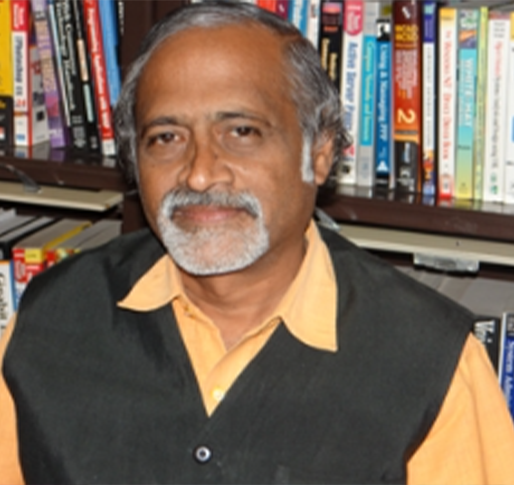
Dr. S. R. Raghavan
Designation: Professor (HAG),
Retired NIT Trichy
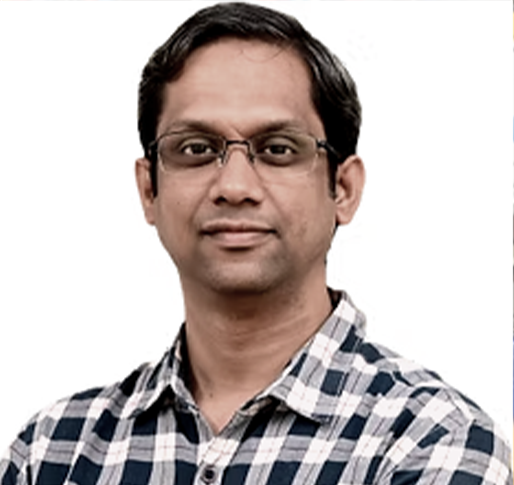
Dr Radha Krishna Ganti
Designation: Professor of Electrical Engineering
IIT Madras
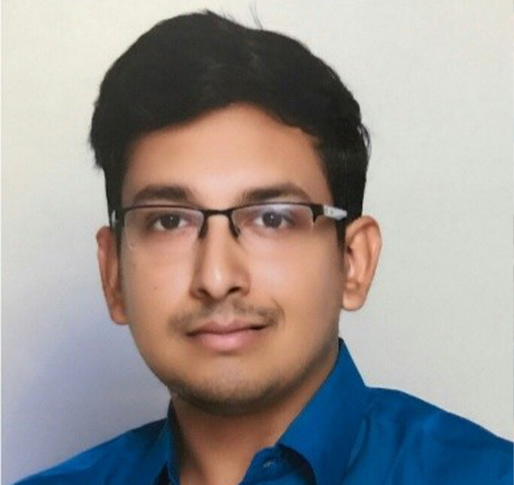
Dr. Debajit De
Designation: Senior R&D Engineer Mercedes-Benz R&D India, Bengaluru
Dr. Rakesh Kumar Jha
Designation: Associate Professor, Department of ECE, Shri Mata Vaishno Devi University, Jammu & Kashmir

Dr. Sudhindra K. R.
Designation: Professor
BMS College of Engineering (BMSCE), Bengaluru
Dr. Ravishankar
Designation: Professor,
Department of ECE,
RVCE, Bengaluru
Dr. Subbarao Boddu
Designation: Assistant Professor,
Department of EE, Mahindra University,
Ecole Centrale School of Engineering, Hyderabad.
Dr. Roseline Immaculate
Designation: Associate Professor,
MSRIT (MS Ramaiah Institute of Technology), Bengaluru
Dr. Dhaval Patel
Designation: Associate Professor, Ahmadabad University
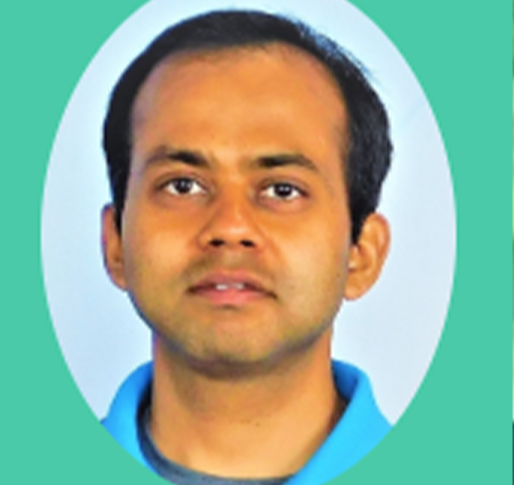
Dr.Adarsh Patel
Designation: Assistant Professor,
SCEE, IIT Mandi, HP
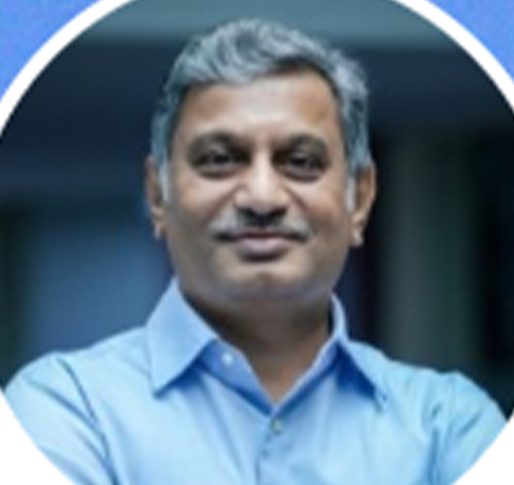
Mr. Ravikiran Annaswamy
Designation: CEO
Numocity Technologies,Bengaluru
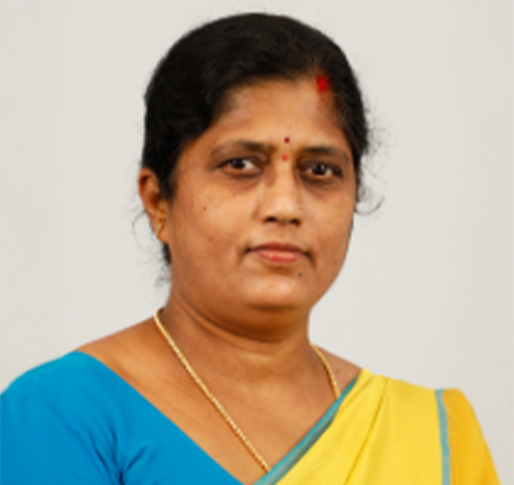
Dr Rajeswari
Designation: Professor and Dean of Academics,
AIT, Bengaluru
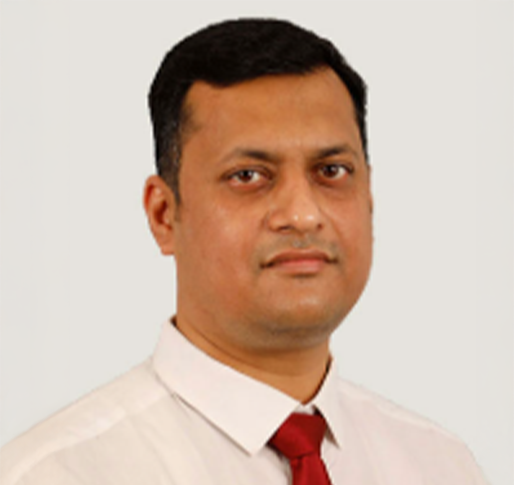
Prof. Devasis Pradhan
Designation: Dean Research and Development,
Acharya Institute of Technology, Assistant Professor Grade 1, Department of ECE, Acharya Institute of Technology Bengaluru

Dr. Jayalaxmi H
Designation: Professor,
Dept. of ECE, AIT, Bengaluru

Mr. Munavar Shariff I
Designation: Assistant Professor, Department of ECE Acharya Institute of Technology, Bengaluru
Program Schedules
| Day | Time | Session | Expert / Activity | Topic / Details |
|---|---|---|---|---|
| Day 1 | 9:00 – 9:30 | — | Inauguration | Opening Ceremony |
| 9:30 – 12:00 | Session 1 | Dr. Preetam Kumar Professor, IIT Patna 30 Years |
Introduction to 5G and RF IC Design Trends | |
| 12:00 – 1:00 | Article Discussion | IEEE Communications Letters (2022) | A Low Complexity Two-Stage LLR Detector for Downlink OFDM-IM NOMA | |
| 1:00 – 1:30 | — | Lunch | — | |
| 1:30 – 4:00 | Session 2 | Dr. Rajarshi Mahapatra Professor, IIT Kharagpur 20 Years |
5G RF Front-End Architectures: Evolution and Innovations | |
| 4:00 – 5:00 | Article Discussion | IEEE T-MTT (2025) | Large-Scale Low-Power 5G mm-Wave Phased-Array Transceiver | |
| Day 2 | 9:30 – 12:00 | Session 3 | Prof. Urmi Nanda Biswa Delhi University 30 Years |
Advanced CMOS Technologies for RF ICs |
| 12:00 – 1:00 | Article Discussion | IEEE Systems Journal (2022) | Decoder Design for Massive-MIMO Systems Using Deep Learning | |
| 1:00 – 1:30 | — | Lunch | — | |
| 1:30 – 4:00 | Session 4 | Dr. Shanthi Professor, RVCE 24 Years |
RF LNA Design & Strategies | |
| 4:00 – 5:00 | Article Discussion | IEEE T-MTT (2025) | 5G NR FR2 Beamforming System | |
| Day 3 | 9:30 – 12:00 | Session 5 | Dr. Rakesh Kumar Jha Central University of Jammu 24 Years |
RF LNA using Cadence Virtuoso |
| 12:00 – 1:00 | Article Discussion | High Confidence Computing (2024) | Aquilo: Temperature-aware Scheduler for mmWave Devices | |
| 1:00 – 1:30 | — | Lunch | — | |
| 1:30 – 4:00 | Session 6 | Dr. Vivek Bohara NTU Singapore 25 Years |
RF CMOS Oscillator Design & Strategies | |
| 4:00 – 5:00 | Article Discussion | Sensors (2024) | Dual-Band CMOS Power Amplifier for 5G | |
| Day 4 | 9:30 – 12:00 | Session 7 | Dr. S Ravishankar RVCE Bengaluru 30 Years |
RF CMOS Oscillators using Cadence Virtuoso |
| 12:00 – 1:00 | Article Discussion | IEEE JSAC (2025) | Semantic Coding & Beamforming for Near-Space MIMO | |
| 1:00 – 1:30 | — | Lunch | — | |
| 1:30 – 4:00 | Session 8 | Dr. Sudhindra K R BMSCE Bengaluru 27 Years |
RF Filters, Matching Networks & Impedance Tuning | |
| Day 5 | 9:00 – 12:00 | Session 9 | Mr. Subhash Mondal Chief Architect, Wipro 25 Years |
Practical Challenges in RF IC Design |
| 12:00 – 12:30 | — | Lunch | — | |
| 12:30 – 3:00 | Session 10 | Mr. Manish Shukla BT India 20 Years |
On-Chip Antennas & mmWave Design | |
| 3:00 – 5:30 | Session 11 | Mr. Manish Shukla | AI/ML Assisted RF IC Design | |
| Day 6 | 9:00 – 12:00 | Session 12 | Dr. Sakthivel R VIT Vellore 23 Years |
RISC-V Processor Design for RF Communication |
| 1:30 – 4:00 | Session 13 | Dr. Roseline Immaculate MSRIT 15 Years |
On-Chip Antenna & mmWave Design | |
| 4:00 – 5:00 | — | Article Summary | — |
| Day | Time | Session | Expert / Activity | Topic / Details |
|---|---|---|---|---|
| Day 7 | 9:00 – 2:30 | Session 14 | Dr. S K Murthy Patent Counsel, Intel |
AI & Machine Learning Applications in RF Design |
| Day 8 | 9:30 – 5:00 | Industry Problem Solving | Numocity Technologies, Bengaluru | Smart Charging Platforms |
| Day 9 | 9:30 – 5:00 | Industry Problem Solving | Numocity Technologies, Bengaluru | Smart Charging Platforms |
| Day 10 | 9:30 – 5:00 | Industry Problem Solving | VVDN Technologies, Bengaluru | RF Engineering |
| Day 11 | 9:30 – 5:00 | Industry Problem Solving | VVDN Technologies, Bengaluru | RF Engineering |
| Day 12 | 9:30 – 1:30 | — | Team-wise Presentation | Industry Output Presentation |
| Day 13 | 1:00 – 3:30 | Session 15 | Dr. Debajit De Sr RF Engineer, VVDN |
Case Study: Modern 5G/6G RFIC Architectures |
| Day 14 | 3:30 – 6:00 | Session 16 | Mr. Joyashankar Dwibedy ComScope India |
Simulation Tools & Measurement Techniques in RF ICs |
| Day 15 | 2:00 – 3:00 | — | Reflection Journal | Participant Reflections |
| Day 16 | 3:00 – 5:00 | — | Feedback & Valedictory | Program Conclusion |
About the College
Acharya Institute of Technology is committed to excel in teaching, learning, research and developing professionals who make a difference globally. Faculty at Acharya is not only involved in teaching but they also pursue research to push the boundaries of human knowledge. The students are motivated to pursue academic research by taking up bigger challenges. Acharya Institute of Technology is the ultimate destination, located in the south Indian city ‘Bangalore’, known as “Silicon Valley of India”. Acharya Institute of Technology was established in the year 2000 and offers 14 undergraduate programmes, 4 postgraduate programmes and 11 research programmes. The diverse academic programmes attract nearly 5000 students from 60+ countries as well as from all parts of India. Acharya is proud of having a large notable alumnus around the world.
Vision of the Institute
- To be a premier engineering department with excellence in teaching, research and innovation, to meet the global industrial standards and to have significant impact on the well-being of the society.
Mission of the Institute
- To provide student centric learning environment, inculcate profound knowledge in both fundamental and applied areas of science and technology.
- To train and mentor the students in developing leadership qualities and team building skill.
About the department/cell organizing the event
The Department of Electronics & Communication Engineering at Acharya Institutes established in the year 2000 affiliated to Visvesvaraya Technological University(VTU), recognized by All Indian Council for Technical Education(AICTE), offers regular full-time UG, PG & research program, has pioneered in carving the careers of its students and helping to acquire the necessary skills required for continuous growth with significant impact toward society.
Acharya is reputed as one of the best engineering colleges in Bangalore, the department has been strengthened by its reputed faculty members from recognized Universities and Organizations with diversified specializations like Communication & Networking, VLSI, Signal Processing Embedded System, etc., Students are trained for broad career opportunities through industry enabled labs like TEXAS- INSTRUMENTS Technology Lab, CADENCE, C-DAC, etc., and student exchange program with different foreign universities, skill development domain training, apart from regular academics to make them competitive and industry-ready.
The Department is well-equipped with laboratories as per VTU, AICTE standards, and industry. The department handshakes with industry and institutes for ongoing research activities in the area of Artificial Intelligence, Communication & Wireless Networks, VLSI, etc. Join the best Electronics and Communication engineering college in Bangalore. Department aims at a holistic approach toward the development of students and society at large through building technical skills and managerial quality.