
Best Bsc MLT Colleges in Bangalore - Acharya Institutes
The B.Sc. Medical Laboratory Technology (MLT) program at Acharya Institute of Allied Health Sciences is designed to equip students with the technical knowledge and practical skills required for diagnostic laboratory services in modern healthcare systems, making it a preferred choice for those looking for an best MLT college in Bangalore. The program focuses on laboratory analysis, disease diagnosis, and clinical testing procedures that support physicians in identifying and treating medical conditions.
Students receive comprehensive training in areas such as hematology, clinical biochemistry, microbiology, immunology, and pathology. Through a blend of theoretical learning and hands-on laboratory training, students develop expertise in handling laboratory equipment, performing diagnostic tests, and maintaining quality control and laboratory safety standards.
Why Choose Medical Laboratory Technology at Acharya
- Comprehensive curriculum covering anatomy, physiology, microbiology, pathology, and clinical biochemistry.
- Training in modern diagnostic laboratory techniques and testing procedures.
- Exposure to laboratory safety protocols, quality control methods, and medical terminology used in healthcare.
- Strong foundation in clinical laboratory sciences and disease diagnosis. Preparation for professional roles in hospitals, diagnostic laboratories, and research facilities.
Experiential Learning
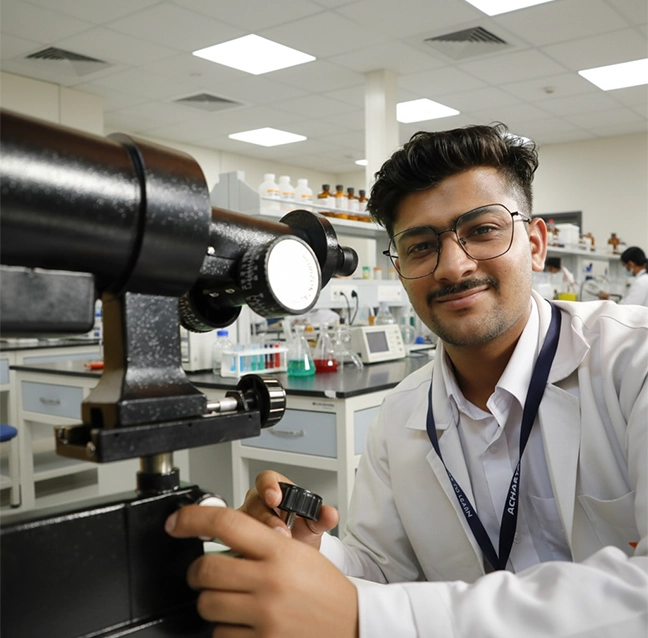
- Hands-on training in laboratory testing and diagnostic procedures.
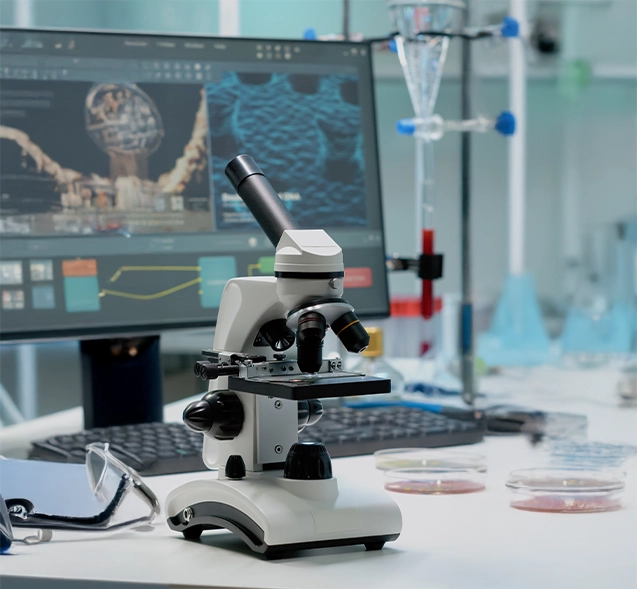
- Practical exposure to biochemical, hematological, immunological, and microscopic analysis.
- Clinical postings and laboratory practice in hospitals and diagnostic centres.
- Training in handling laboratory instruments, sample processing, and diagnostic reporting.

Academic Approach
- Integrated curriculum combining laboratory sciences, medical diagnostics, and healthcare practices.
- Application-oriented learning through laboratory demonstrations, experiments, and case studies.
- Emphasis on accurate diagnostic testing, laboratory management, and patient data analysis.
- Continuous evaluation through laboratory assessments, clinical training, and academic examinations.
Student Development & Activities
- Workshops and seminars on advancements in laboratory medicine and diagnostic technologies.
- Participation in healthcare awareness initiatives and laboratory science discussions.
- Opportunities to engage in research projects, laboratory demonstrations, and academic presentations.
- Activities that strengthen analytical skills, teamwork, and professional ethics in healthcare environments.
Faculty Expertise
The program is supported by experienced faculty members with expertise in clinical laboratory sciences, pathology, microbiology, and diagnostic technology. Their academic and clinical experience helps students develop strong theoretical knowledge and practical competencies required for medical laboratory professions.
Career Pathways
Graduates of B.Sc. Medical Laboratory Technology have diverse career opportunities in healthcare institutions, research laboratories, and diagnostic centres.
- Medical Laboratory Technician: Perform diagnostic tests and laboratory analysis to support disease diagnosis and treatment.
- Clinical Laboratory Scientist: Conduct specialized laboratory investigations in hospitals and research laboratories.
- Microbiologist: Work in laboratories studying microorganisms related to infectious diseases.
- Immunologist: Assist in diagnostic testing related to immune system disorders.
- Clinical Chemistry Technician: Perform biochemical testing on blood and body fluids.
- Research Laboratory Technician: Work in biomedical research laboratories and healthcare research institutions.
- Biomedical Technician: Assist in managing laboratory equipment and diagnostic technologies.
Overview
Duration : 4 years including 1 year of Internship
Eligibility : 10+2 (Science – PCB / PCMB). Min 50%.
Inclusions: Tuition Fee, University Registration, Eligibility Fee, Miscellaneous Fee, Laboratory Fee, Library Fee, Sports Fee and Clinical Fee.
Exclusions : Uniform & Stationery.
Examination fee as prescribed by the University / Board.
Note : Students are offered complimentary OBT and softskills.
Mandatory first-year hostel stay with four-sharing allotment with upgrades available at additional cost (mess not included).
Frequently Asked Questions
B.Sc. Medical Laboratory Technology is a four-year undergraduate healthcare programme that trains students to perform laboratory tests and diagnostic analyses that help doctors diagnose and treat diseases.
The programme duration is 4 years, including 1 year of internship/clinical training.
Candidates must pass 10+2 / PUC (Science stream) with Physics, Chemistry, Biology, and English, securing at least 45% aggregate marks.
Students study anatomy, physiology, biochemistry, microbiology, pathology, medical terminology, laboratory techniques, safety procedures, and quality control methods.
Students receive hands-on training in laboratory testing such as blood analysis, body-fluid testing, and diagnostic investigations using modern laboratory equipment.
Students learn biochemical, hematological, immunological, and microscopic diagnostic analysis along with laboratory safety and quality testing procedures.
Graduates can work as Medical Laboratory Technicians, Clinical Laboratory Scientists, Microbiologists, Immunologists, Research Lab Technicians, and Biomedical Technicians.
They can work in hospitals, diagnostic laboratories, pathology labs, nursing homes, research labs, and biotechnology laboratories.
Medical lab technologists play a critical role in healthcare by conducting tests and analyses that help physicians identify diseases and decide treatments.
Yes. The healthcare sector increasingly depends on laboratory diagnostics, and demand for skilled laboratory technologists continues to grow.