
Aerospace Engineering at Acharya – Aerospace Engineering College in Bangalore, India
The B.E. in Aerospace Engineering program at Acharya Institute of Technology is designed for students who aspire to pioneer the future of flight and space exploration. This multidisciplinary program integrates the core principles of aerodynamics, propulsion, structural mechanics, and avionics to design and develop cutting-edge aircraft and spacecraft.
The curriculum is structured to provide a deep understanding of atmospheric and space flight, preparing engineers to tackle challenges in civil aviation, defense, and deep-space missions. Through a combination of rigorous theoretical study and advanced laboratory work, students learn to build systems that operate in some of the most demanding environments known to humankind, making it a top choice for students seeking the best Aerospace Engineering college in Bangalore.
Why Choose Aerospace Engineering at Acharya?
- Specialized Infrastructure: Access to high-end labs including Subsonic Wind Tunnels, Propulsion Labs, and Flight Simulation facilities.
- Modern Design Tools: Training in industry-standard software for Computational Fluid Dynamics (CFD), Finite Element Analysis (FEA), and CAD/CAM.
- Multi-Industry Scope: Curriculum that covers both atmospheric flight (Aeronautics) and space flight (Astronautics).
- Research-Driven Culture: Opportunities to work on drone technology, satellite systems, and innovative composite materials.
- Industry Exposure: Regular visits to aerospace giants, MRO (Maintenance, Repair, and Overhaul) facilities, and research organizations like ISRO and NAL.
- Expert Mentorship: Guidance from faculty with extensive experience in aerodynamics, structural design, and propulsion systems.
- Strong Foundation: Comprehensive learning that balances classical mechanics with emerging technologies like UAVs and reusable launch vehicles.
Research & Innovation
The department fosters a culture of innovation, encouraging students to push the boundaries of current aerospace technology. Students gain research exposure through:
- Faculty-guided projects in areas such as hypersonic flow, smart materials, and orbital mechanics.
- Design and testing of UAVs (Unmanned Aerial Vehicles) and micro-satellites.
- Technical paper presentations at national and international aerospace conferences.
- Participation in innovation challenges focused on fuel efficiency and sustainable aviation.
Experiential Learning
The program emphasizes "hands-on" engineering, where students transition from mathematical models to physical prototypes. Students gain hands-on experience through:
- Aerodynamics Laboratory: Conducting wind tunnel experiments to study lift, drag, and pressure distribution.
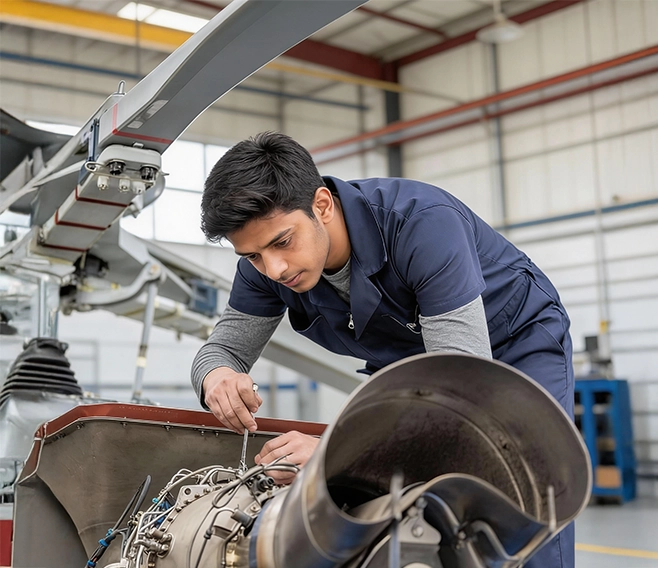
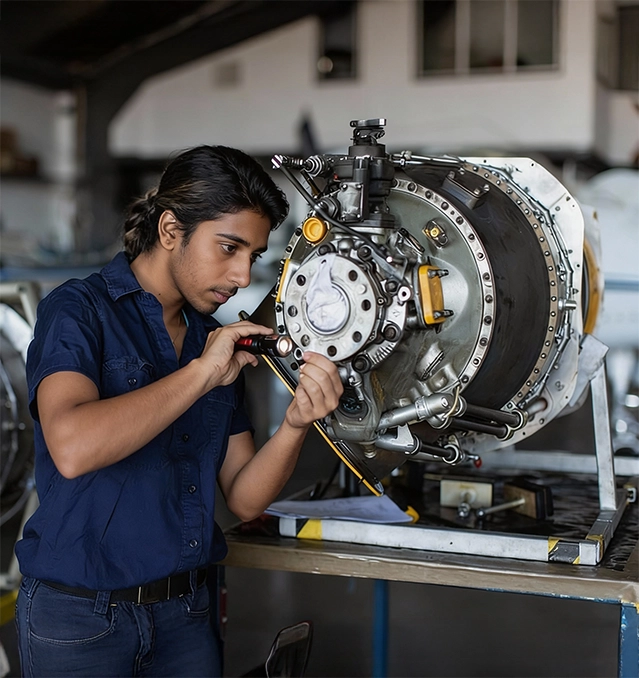
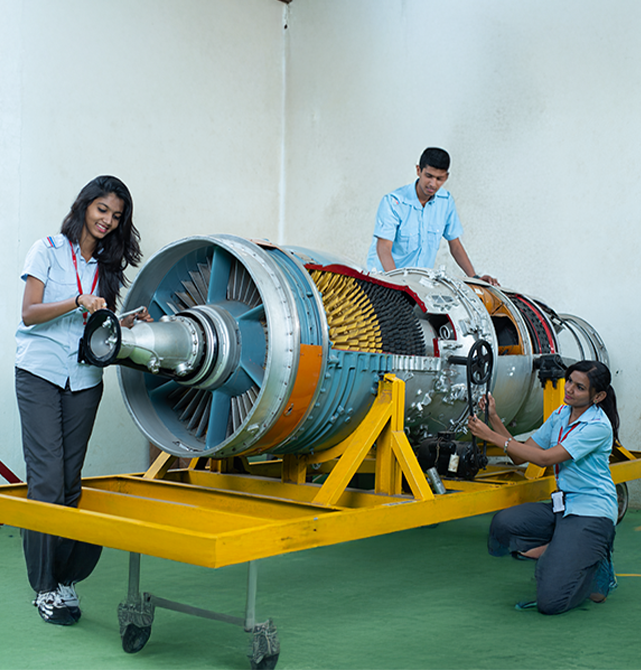
- Propulsion Lab: Testing of piston engines and studying the mechanics of jet and rocket propulsion.
- Structures Lab: Analyzing the strength and durability of aerospace-grade materials and airframe components.
- Modeling and Simulation: Using advanced software to simulate flight conditions and structural stresses.
- Workshops on Drone Assembly: Building and programming autonomous flight systems. This practical exposure ensures students develop the technical proficiency required to work on high-stakes aerospace projects.
Academic Approach
The department follows an industry-centric framework that ensures students are ready for the rapidly evolving aerospace sector. Key academic practices include:
- Outcome-Based Education (OBE) focused on core technical competencies and safety standards.
- Project-Based Learning where students design aircraft components from conceptual stages to final analysis.
- Guest Lectures from scientists and engineers from organizations like HAL, DRDO, and ISRO.
- Integrated Skill Labs that bridge the gap between classroom theory and hangar-floor reality.
Students also gain expertise in domains such as:
- Aerodynamics and Fluid Mechanics.
- Aircraft Structures and Materials.
- Flight Mechanics and Control Systems.
- Rocketry and Spacecraft Technology.
Student Development & Activities
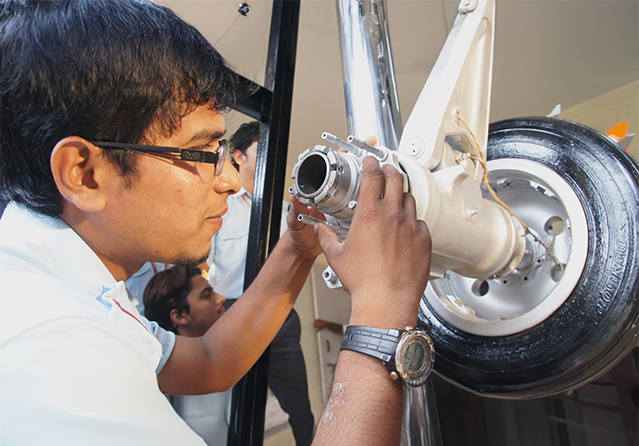
Students engage in professional activities that build leadership and specialized technical skills. The department regularly organizes:
- Aerospace Technical Forums for knowledge sharing and peer collaboration.
- Design Competitions such as water-rocket launches and glider design contests.
- Value Added Programs (VAPs) in specialized aerospace software and certification.
- Alumni Interaction Sessions providing insights into global career trends in aviation and space.
- These activities help students build a professional network and prepare for the rigorous demands of the global aerospace industry.
Career Pathways
Aerospace Engineering offers prestigious career opportunities across defense, commercial aviation, and space exploration. Graduates find opportunities with premier organizations such as ISRO, DRDO, HAL, Airbus, Boeing, and GE Aviation. The program also provides an excellent foundation for higher education (M.S./Ph.D.) and specialized research in international aerospace hubs.
Graduates can pursue roles such as:
- Aerospace Design Engineer
- Aerodynamics Consultant
- Flight Test Engineer
- Propulsion Systems Engineer
- Structural Analyst
- UAV/Drone Developer
- Satellite Systems Engineer
Overview
Duration : 4 Years
Eligibility : 10+2 with PCM/PMC/PME + English, min 45%. Age 17+.
Entrance Quota : CET/ COMED K / JEE
Inclusions: Tuition Fee, University Registration, Eligibility Fee, Miscellaneous Fee, Laboratory Fee, Library Fee and Sports Fee.
Exclusions : Uniform & Stationery.
Examination fee as prescribed by the University / Board.
Note : Students are offered complimentary Laptop, OBT, AMCAT/Cocube, Global Immersion Program, Softskill training, Domain training & Linkedin Learning Licence.
Frequently Asked Questions
Aerospace Engineering is the branch of engineering that deals with the design, development, testing, and maintenance of aircraft, spacecraft, satellites, missiles, and space systems. It combines aeronautical and astronautical engineering to address both air and space technologies.
Students must complete 10+2 with Physics and Mathematics along with Chemistry (or equivalent science subject) and meet the minimum 45% aggregate requirement.
Admissions are offered through KCET, COMEDK, or JEE entrance examinations.
The curriculum includes aerodynamics, propulsion, aircraft structures, avionics, flight mechanics, space technology, materials science, and CAD/CAE along with laboratory and project work.
Yes. Students gain exposure to industry practices through collaboration with Siemens, learning modern aerospace engineering tools and technologies used in global manufacturing and design environments.
Students participate in hands-on learning through laboratories, research activities, aero-modeling, UAV development, industry-oriented projects, and technical workshops.
Graduates can work in aviation, defence, space research, aircraft manufacturing, satellite technology, and aerospace R&D organizations including ISRO, DRDO, HAL, and international space agencies.
Yes. Students receive exposure through industrial visits, technical tours, internships, and interaction with aerospace industries and research organizations.
The program emphasizes project-based learning, research exposure, industry interaction, modern aerospace tools, and employability-focused training preparing students for emerging aerospace and space technology careers.