
Join Best Robotics and AI College in Bangalore - Acharya Institute of Technology
The B.E. in Robotics and Artificial Intelligence program at Acharya Institute of Technology is a cutting-edge multidisciplinary field that combines mechanical engineering, electronics, computer science, and cognitive modeling. In an era of rapid automation, this program is designed to develop engineers who can create intelligent machines capable of perceiving, reasoning, and acting in complex environments. Students build a strong foundation in robotic design and control systems while gaining specialized expertise in machine learning, computer vision, and autonomous navigation. Through a curriculum that emphasizes both hardware construction and algorithmic intelligence, the program enables students to lead the next wave of innovation in industrial automation, healthcare robotics, and smart systems, making it a strong choice for students looking for the best Robotics and AI college in Bangalore.
Why Choose Robotics & Artificial Intelligence at Acharya?
- Future-Ready Integration: A unique curriculum that merges the physical world of robotics with the digital intelligence of AI.
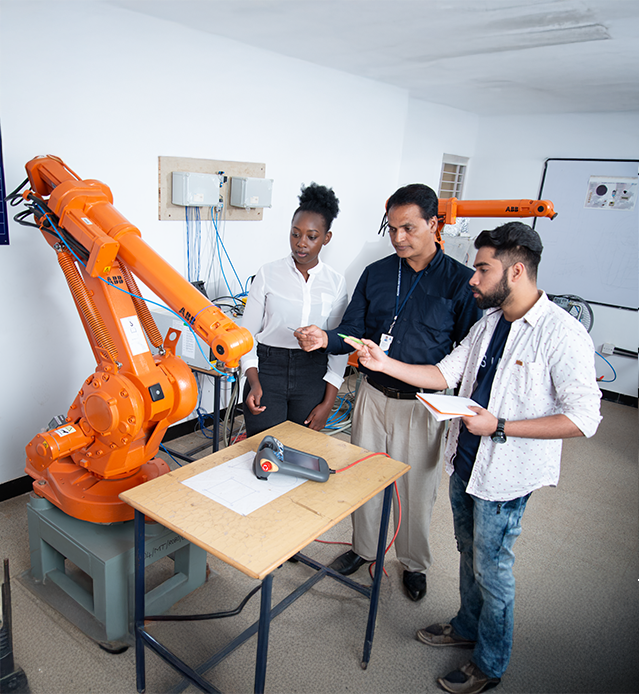
- Specialized Labs: Access to advanced facilities for robot kinematics, embedded systems, and high-performance computing for AI model training.
- Industry 4.0 Focus: Strong emphasis on the role of robotics in smart manufacturing and the future of autonomous systems.
- Multidisciplinary Environment: Collaborative learning across various engineering domains to build comprehensive robotic solutions.
- Hands-on Projects: Opportunities to design and build autonomous drones, mobile robots, and collaborative industrial arms.
- Expert Mentorship: Guidance from faculty and industry experts specializing in neural networks, control theory, and mechatronic design.
- Professional Readiness: Strategic focus on developing skills that are in high demand across global tech giants and specialized robotics firms.
Research & Innovation
The department fosters a culture of technical inquiry where students are encouraged to explore the frontiers of autonomous technology and machine intelligence. Students gain research exposure through:
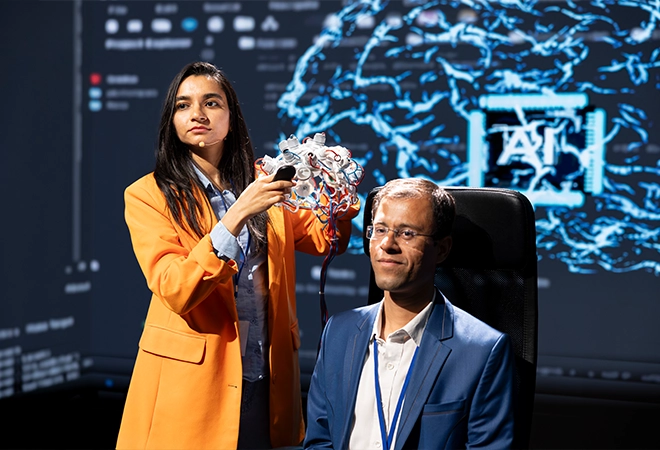
- Faculty-guided research in deep learning, swarm robotics, and human-robot interaction.
- Participation in Robotics Competitions and national-level hackathons.
- Design of intelligent algorithms for real-world applications in logistics, medicine, and surveillance.
- Interdisciplinary research initiatives that apply AI to solve complex mechanical and environmental challenges. These opportunities strengthen analytical thinking and the ability to innovate in the rapidly evolving field of intelligent automation.
Experiential Learning
The program emphasizes learning through creation, requiring students to apply theoretical concepts to physical and virtual robotic platforms. Students gain hands-on experience through:
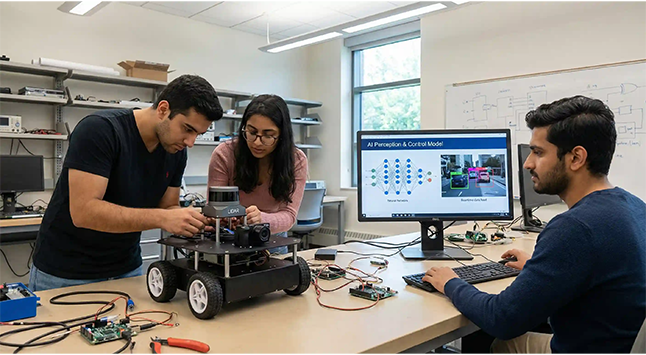
- Robotics Simulation and Programming using industry-standard tools and frameworks like ROS (Robot Operating System).
- AI Model Development using platforms like TensorFlow, PyTorch, and NVIDIA hardware.
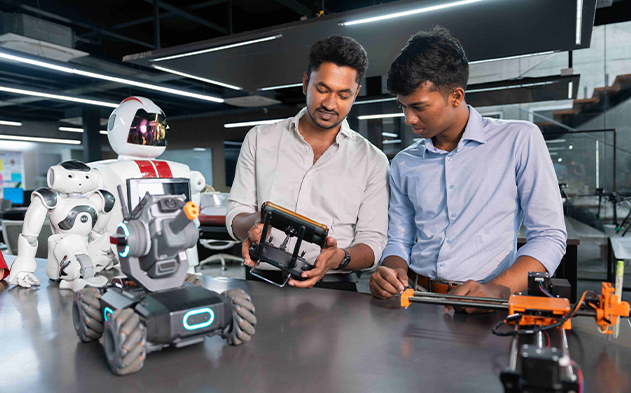
- Hardware Prototyping involving sensors, actuators, microcontrollers, and advanced materials.
- Hackathons and Bootcamps focused on solving industrial automation challenges.
- Expert sessions on the ethics of AI and the future of human-robot collaboration.
- This practical exposure ensures students develop the technical mastery required to design and manage complex, intelligent machines.
Academic Approach
The department follows a project-centric framework with a strong emphasis on the synergy between physical systems and digital intelligence. Key academic practices include:
- Outcome-Based Education (OBE) focused on real-world engineering competencies.
- Project-Based Learning where students build functioning robotic prototypes.
- Case Studies on the deployment of AI in autonomous vehicles and smart factories.
- Value-Added Programs (VAPs) and certifications in specialized AI and robotics technologies.
Students also gain expertise in emerging domains such as:
- Machine Learning & Deep Learning.
- Computer Vision & Pattern Recognition.
- Robot Kinematics & Dynamics.
- Natural Language Processing (NLP) for Robotics.
Student Development & Activities
Students actively participate in professional and technical development activities to build leadership and innovation capabilities. The department regularly organizes:
- Technical Workshops on drone technology and autonomous navigation.
- Robotics Clubs and Competitions to foster teamwork and competitive spirit.
- Expert Seminars on the latest trends in Artificial Intelligence and Machine Learning.
- Career Guidance sessions focused on the specialized robotics and AI job markets.
Career Pathways
Robotics and Artificial Intelligence is one of the most high-growth domains, offering exceptional career opportunities across various sectors. Graduates find opportunities with global technology leaders, aerospace companies, automotive firms, and specialized robotics startups. The program also provides a strong foundation for higher education, specialized research, and entrepreneurial ventures in the field of intelligent systems.
Graduates can pursue roles such as:
- Robotics Engineer
- AI/Machine Learning Engineer
- Automation Architect
- Computer Vision Scientist
- Software Developer (Robotics & AI)
- Control Systems Specialist
- Data Scientist (Robotics focus)
Overview
Duration : 4 Years
Eligibility : 10+2 with PCM/PMC/PME + English, min 45%. Age 17+.
Entrance Quota : CET/ COMED K / JEE
Inclusions: Tuition Fee, University Registration, Eligibility Fee, Miscellaneous Fee, Laboratory Fee, Library Fee and Sports Fee.
Exclusions : Uniform & Stationery.
Examination fee as prescribed by the University / Board.
Note : Students are offered complimentary Laptop, OBT, AMCAT/Cocube, Global Immersion Program, Softskill training, Domain training & Linkedin Learning Licence.
Frequently Asked Questions
Robotics and Artificial Intelligence Engineering is a multidisciplinary engineering program that combines mechanical engineering, electronics, computer science, and AI to design intelligent machines and automated systems.
Students study:
- Robotics systems
- Machine learning and AI algorithms
- Embedded systems
- Sensors and actuators
- Automation and control systems
- Intelligent robotic programming
They also design and test algorithms for implementing AI in robotic systems.
Industries increasingly use robotics and AI to perform data-intensive and repetitive tasks, creating high demand for skilled engineers in this field.
Product Lifecycle Management (PLM) teaches how products move from concept → digital design → simulation → manufacturing → maintenance.Learning Siemens PLM tools exposes students to the same platforms used in manufacturing, automotive, and industrial robotics companies.
Yes. Students work in practical laboratories and apply multidisciplinary concepts to real-world robotic applications and automation systems.
Graduates can work in:
- Robotics companies
- Automation industries
- AI development firms
- Automotive manufacturing
- Healthcare robotics
- Defense and research organizations
Robotics and AI graduates have versatile career opportunities across industries.
Computer Science focuses mainly on software development, while Robotics & AI focuses on intelligent machines — combining hardware, electronics, and AI decision-making systems.
The program is a 4-year B.Tech degree.
Eligibility: 10+2 with Physics and Mathematics and one of Chemistry/Computer Science/Biology/Electronics as per VTU norms.
Students develop:
- Robot programming
- Machine learning implementation
- Automation system design
- Embedded hardware integration
- Industrial product development skills (Siemens PLM)