The Bachelor of Optometry (B.Optom.) program at Acharya Institute of Allied Health Sciences is designed to develop highly skilled, ethically responsible, and clinically competent eye-care professionals capable of addressing the growing visual health needs of society, making it a leading Optometry college in Bangalore.
With rapid lifestyle changes, increased digital device usage, and the rising prevalence of visual disorders, optometrists today play a crucial role beyond traditional vision correction by delivering comprehensive primary eye care services. Optometry has been formally recognized as a regulated healthcare profession under the National Commission for Allied and Healthcare Professions (NCAHP) Act, 2021, ensuring standardized education, competency-based training, and defined professional pathways across India.
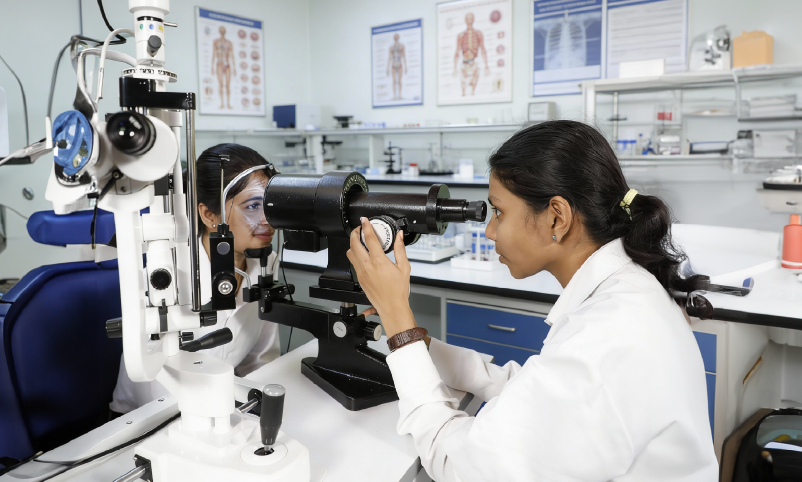
The program equips students with strong foundations in vision science, clinical optometry, and professional ethics while providing progressive clinical exposure through practical training and patient care experience. Graduates are trained to perform eye examinations, detect refractive errors, prescribe corrective lenses, diagnose common ocular conditions, and provide vision rehabilitation while working collaboratively within multidisciplinary healthcare teams.
Why Choose Optometry at Acharya
- Earned a Bachelor of Optometry (B.Optom.) degree affiliated with Rajiv Gandhi University of Health Sciences (RGUHS).
- Optometry is recognized as a regulated Healthcare Profession under the NCAHP Act, 2021.
- In-house optometry clinic with specialty services including Contact Lens, Binocular Vision, and Low Vision care.
- Clinical postings from the second year in reputed eye hospitals providing real-world patient care exposure.
- Mandatory internship for advanced clinical training and professional skill development.
- Opportunities to participate in community eye-care programs and outreach initiatives.
- Experienced faculty supported by active research projects and industry collaborations.
- Diverse career pathways in clinical practice, hospitals, industry, and academic fields.
Experiential Learning
Optometrists can choose to practice independently, collaborate with ophthalmologists, or work in clinics, hospitals, and optical establishments.
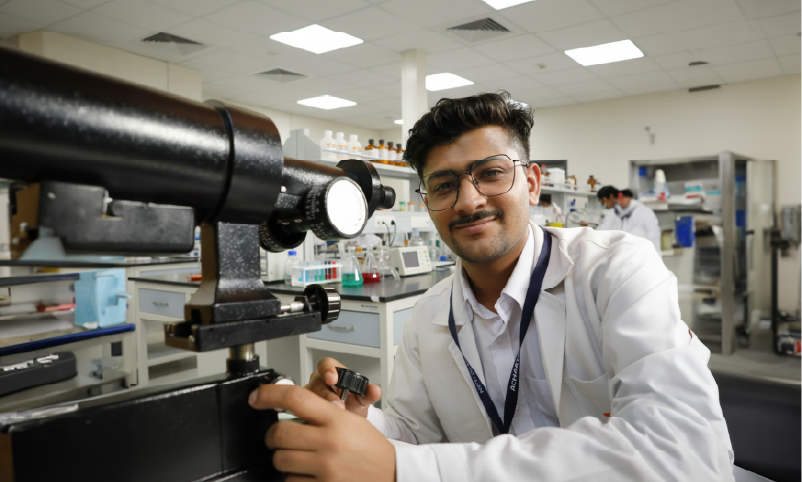
- Hands-on training in eye examination techniques, refraction, and diagnostic procedures.
- Clinical exposure in contact lens practice, binocular vision assessment, and low-vision rehabilitation.
- Practical learning through clinical postings in hospitals and eye-care institutions.
- Participation in community vision screening programs and eye health awareness initiatives.

Academic Approach
- Interdisciplinary curriculum combining vision science, clinical optometry, and healthcare management.
- Application-oriented learning through demonstrations, case discussions, and clinical simulations.
- Progressive clinical training integrated throughout the academic program.
- Emphasis on professional ethics, patient communication, and evidence-based clinical practice.

Student Development & Activities
- Workshops, seminars, and guest lectures by ophthalmologists and vision science experts.
- Participation in vision screening camps and community eye-care outreach programs.
- Opportunities for research presentations, case discussions, and academic competitions.
- Activities that promote leadership, communication skills, and patient-centered healthcare practice.
Faculty Expertise
The Department of Optometry is supported by experienced faculty members with strong academic backgrounds and clinical expertise in vision science, ocular diagnostics, and optometric practice. Their guidance ensures students gain both theoretical knowledge and practical competencies aligned with national healthcare standards.
Career Pathways
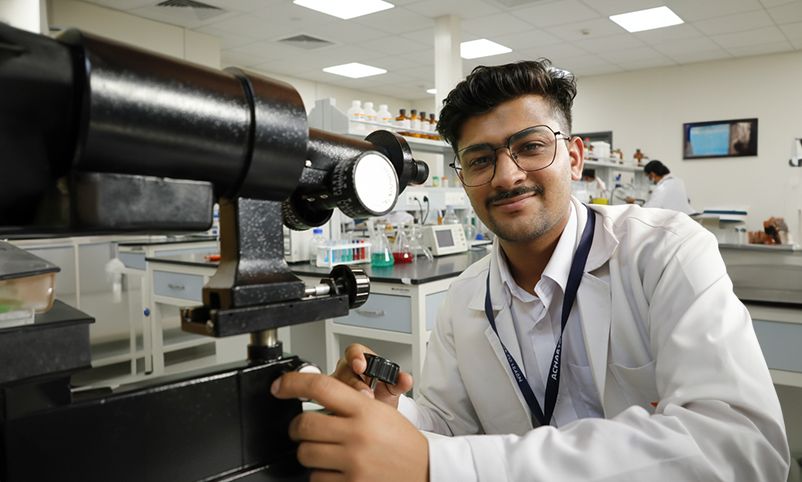
Optometry is a rapidly expanding healthcare profession offering diverse career opportunities across clinical practice, industry, research, and education.
- Clinical Practice & Hospitals: Work in leading eye hospitals and clinics providing comprehensive eye examinations, contact lens services, low-vision care, and diagnostic support for ocular diseases.
- Private Practice & Optical Chains: Establish independent optometry clinics or work with organized optical chains delivering professional vision care services.
- Corporate & Ophthalmic Industry: Opportunities with lens manufacturers, contact lens companies, ophthalmic pharmaceutical firms, and medical device industries in professional services, training, and product development roles.
- Public Health & Community Eye Care: Contribute to vision screening programs, NGO projects, and community eye health initiatives focused on reducing preventable blindness.
- Occupational & Industrial Vision Care: Conduct workplace vision screening and develop eye safety programs for industries and organizations.
- Academics & Education: Pursue teaching careers as faculty members, clinical instructors, or academic administrators in optometry institutions.
- Research & Vision Science: Engage in research related to contact lenses, binocular vision, retinal diagnostics, low vision, and public health optometry.



 74066-44449
 97317-97677


