
Best Diploma Electronics and Communication Colleges in India - Acharya Polytechnic
Diploma in Electronics and Communication Engineering focuses majorly on low voltage Engineering with concepts of electronic networks and devices, electric and magnetic fields, computer fundamentals and communication and control systems. Diploma in ECE in Bangalore provides the added bonus of internship and placement opportunities in MNCs. Students can also work on several projects on campus and are encouraged to pick up research in the respective field.
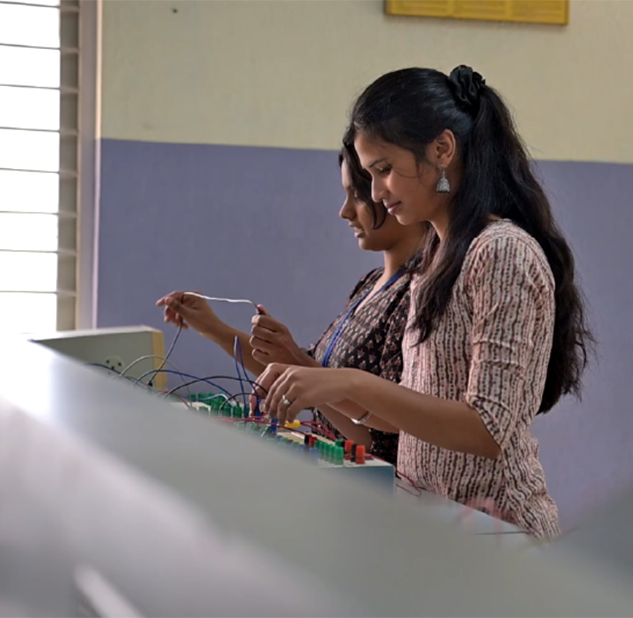
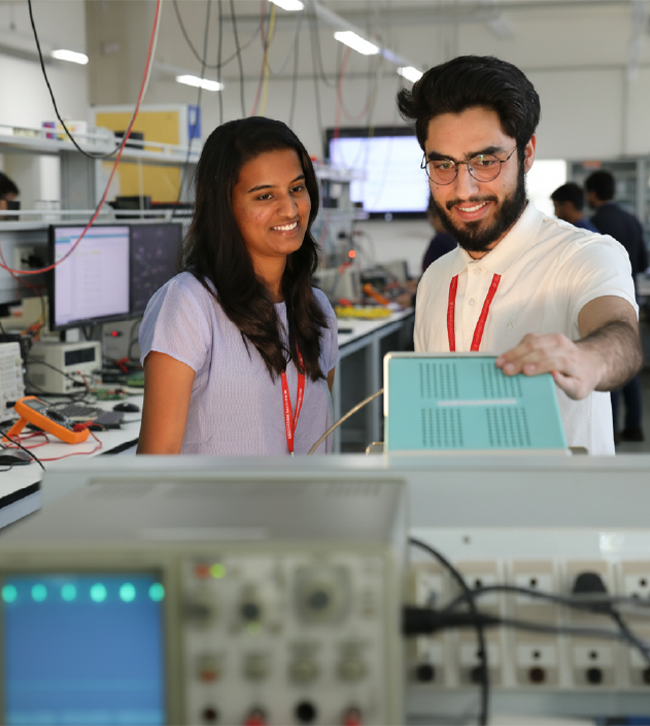
At Acharya Polytechnic, students are given hands-on training in C Programming, PCB Designing and Simulation, Microcontroller 8051 Programming, VHDL Programming, VLSI, Arm Controller, Designing Projects, MatLab Programming, etc. The world-class Learning Resource Center of Acharya will also provide students with the opportunity to access and train on several add-on programs thereby increasing their probability of employability. The training department of Acharya also works in tandem with the placement department to ensure the students are trained to meet the requirements of the industries through domain and soft skill training. These features make Acharya the best communication engineering college in Bangalore.
Program Highlights
- Introduction to programming concepts and languages, including languages like Java, C++, Python, and others. Students learn to write and debug code
- Study of data structures (e.g., arrays, linked lists, trees) and algorithms for solving computational problems efficiently
- Introduction to database design, SQL, and database management systems for organizing and manipulating data
- Training in web development technologies, including HTML, CSS, JavaScript, web frameworks, and web application development
- Learning software development methodologies, including the software development life cycle, version control, and coding best practices
- Study of operating system concepts, including processes, memory management, file systems, and system administration
- Understanding of computer networking principles, network protocols, and network administration
Career Scope
The career scope for individuals with a Diploma in Computer Science is diverse, and it can lead to positions in various industries, including technology companies, government organizations, healthcare, finance, and more.
- Electronics Technician
- Telecommunications Technician
- Network Administrator
- Field Service Engineer
- Electronics Design Engineer
- Broadcast Technician
- Control Systems Technician
- Research and Development Technician
Program outcome
- Basic Knowledge: An ability to apply the basic Engineering knowledge to solve Electronics and Communication engineering problems
- Discipline Knowledge: An ability to apply discipline specific knowledge to solve core and /or applied engineering problems
- Experiments and practice: An ability to perform experiments and develop how to analyze and interpret the results to solve Electronics and Communication engineering problem
- Engineering Tools: An Ability to identify and select modern tools such as simulators, synthesizers etc to analyze and validate the solutions
- The Engineer and society: Apply the knowledge to assess global and societal issues relevant to engineering practices
- Environment and sustainability: Examine the impact of engineering solutions in global and environmental contexts and utilize the knowledge for sustained development
- Ethics: An ability to inculcate and practice professional and ethical responsibilities
- Individual and Team work: Ability to function effectively as an individual and as a team member to accomplish a goal
- Communication: An ability to communicate effectively
- Lifelong learning: Recognize the need for, and have the preparation and ability to engage in independent and lifelong learning in the context of technological changes
Overview
Duration : 3 Years
Eligibility : Passed SSLC / 10th, with English, Science and Mathematics with an aggregate 35%.
Inclusions: Tuition Fee, University Registration, Eligibility Fee, Miscellaneous Fee, Laboratory Fee, Library Fee and Sports Fee.
Exclusions : Uniform & Stationery.
Examination fee as prescribed by the University / Board.
Note : Students are offered complimentary OBT and softskills.
Frequently Asked Questions
It is a three-year full-time diploma programme that teaches electronics, digital systems, communication technologies, microprocessors, embedded systems, and circuit design.
Students must have passed SSLC/10th (or equivalent) with Science and Mathematics from a recognised board and secured a minimum 35% aggregate.
The programme runs for three years of full-time study.
Students study Electronic Devices, Analog & Digital Electronics, Signals & Systems, Communication Engineering, Microcontrollers, Wireless Technology, and Embedded Systems.
Yes — hands-on practical lab work with circuit design, PCB fabrication, embedded programming, and communication system simulations are parts of the curriculum.
Students gain skills in circuit analysis, digital design, microcontroller programming, communication systems, troubleshooting, and technical problem-solving.
Graduates can work as Electronics Technicians, Communication Technicians, Embedded Systems Developers, Field Service Engineers, Network Technicians, and Test Engineers.
Yes. Students can continue into engineering degree programmes like B.E/B.Tech in Electronics & Communication or related fields through lateral entry.
Yes. The programme emphasises industry-oriented learning and includes opportunities for internships and practical exposure to real-world electronic systems.
Yes. Training and placement initiatives help students connect with companies in electronics, communication, and IT sectors.