
Best Mechanical Engineering Colleges in Bangalore
The B.E. in Mechanical Engineering program at Acharya Institute of Technology is a comprehensive 4-year undergraduate program affiliated to Visvesvaraya Technological University (VTU). The program provides a strong core engineering foundation by integrating fundamental principles with engineering mechanics and materials science to design, analyse, manufacture, and maintain mechanical systems.
With a balanced emphasis on theory, laboratory practice, and project-based learning, the curriculum is aligned with current industrial requirements. Graduates develop practical competence and problem-solving skills, preparing them for versatile careers in automotive, energy, aerospace, and manufacturing sectors, making it a preferred choice for students looking for the best Mechanical Engineering college in Bangalore.
Why Choose Mechanical Engineering at Acharya?
- Accredited Excellence: An NBA-accredited department functioning within a NAAC-accredited institutional framework.
- Industry-Aligned Curriculum: A syllabus designed to meet modern industrial needs, emphasizing both traditional and emerging technological domains.
- Advanced Infrastructure: Access to high-end laboratories and facilities that support a "learning by doing" philosophy.
- Professional Forums:Active engagement through the Forum Of Acharya Mechanical Engineers (FAME) and student chapters of ASME and IIF.
- Holistic Development: Integration of technical skills with leadership, teamwork, and outreach initiatives like NSS/NCC.
- Expert Faculty: Mentorship from experienced educators with significant backgrounds in industry and research.
- Continuous Industry Connect: Regular workshops, seminars, and technical events to keep students updated on global engineering trends.
Research & Innovation
The department fosters a research-oriented culture supported by experienced faculty who mentor students in academic and professional development. Students gain research exposure through:
- Faculty-guided projects in core areas like materials science and engineering mechanics.
- Innovation challenges and technical competitions held through department forums.
- Design and Analysis of complex mechanical systems using modern engineering tools.
- Collaborative Research initiatives that prepare students for higher education and R&D roles in premier institutions. These opportunities strengthen analytical thinking and prepare students to contribute to the next generation of mechanical technologies.
Experiential Learning
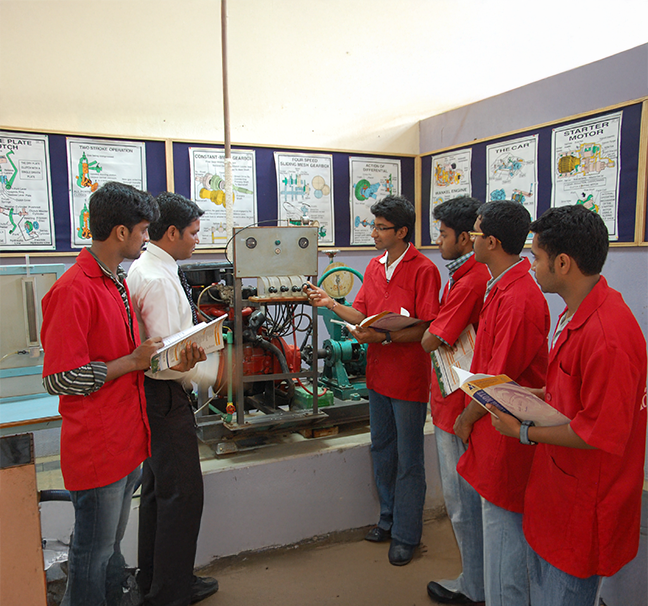
The program emphasizes experiential learning through extensive laboratory practice and industry-focused projects. Students gain hands-on experience through:
- Practical Laboratory Sessions that complement theoretical engineering principles.
- Project-Based Learning integrated throughout the 4-year curriculum.
- Technical Workshops and seminars focused on manufacturing and industrial automation.
- Engagement with Industry Standards in design, analysis, and maintenance of mechanical systems.
- Co-curricular activities including competitions and leadership programs organized by FAME. This practical exposure ensures students develop the competence required to excel in the automotive, aerospace, and manufacturing industries.
Academic Approach
The department follows a structured academic framework that balances fundamental principles with practical implementation. Key academic practices include:
- Outcome-Based Education aligned with NBA and NAAC standards.
- Domain-Specific Training (DST) focused on core mechanical engineering competencies.
- Structured Career Preparation through the Assessment, Training and Placement (ATP) framework.
- Soft Skills Training (SST) to enhance communication and workplace readiness from the first semester.
Students also gain expertise in domains such as:
- Automotive and Aerospace Engineering.
- Energy Systems and Materials Science.
- Manufacturing and Industrial Automation.
- Mechanical System Design and Analysis.
Student Development & Activities
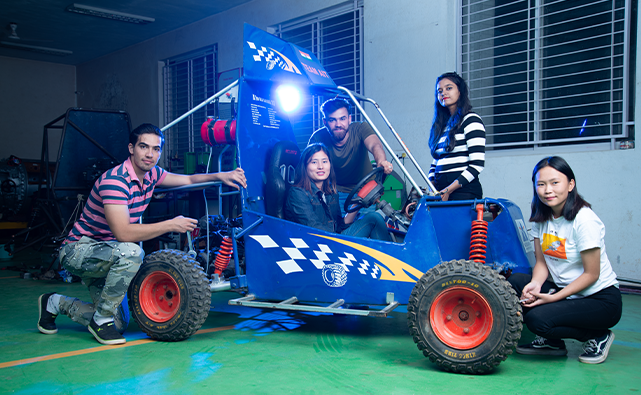
Beyond the classroom, students participate in a wide range of technical and extracurricular activities. The department regularly organizes:
- Technical Events and Competitions through the FAME student forum.
- Professional Chapter Activities via ASME and the Indian Institute of Foundrymen (IIF).
- Leadership and Cultural Programs to build well-rounded professional profiles.
- Outreach Initiatives including NSS and NCC activities. These activities help students build leadership, teamwork, and innovation capabilities while fostering a commitment to societal impact.
Career Pathways
Mechanical Engineering offers diverse career opportunities across core industries, government sectors, and research organizations. Graduates have progressed into leading manufacturing organizations, national research institutions, and defense services. The program also provides a strong foundation for higher studies in premier global institutions and entrepreneurial ventures in engineering sectors.
Graduates can pursue roles such as:
- Design Engineer
- Manufacturing Engineer
- Automotive Engineer
- Aerospace Systems Analyst
- Industrial Automation Specialist
- Maintenance Engineer
- Research Scientist
Overview
Duration : 4 Years
Eligibility : 10+2 with PCM/PMC/PME + English, min 45%. Age 17+.
Entrance Quota : CET/ COMED K / JEE
Inclusions: Tuition Fee, University Registration, Eligibility Fee, Miscellaneous Fee, Laboratory Fee, Library Fee and Sports Fee.
Exclusions : Uniform & Stationery.
Examination fee as prescribed by the University / Board.
Note : Students are offered complimentary Laptop, OBT, AMCAT/Cocube, Global Immersion Program, Softskill training, Domain training & Linkedin Learning Licence.
Frequently Asked Questions
Mechanical Engineering is a core engineering discipline that deals with the design, manufacturing, analysis, and maintenance of mechanical systems using principles of physics, thermodynamics, materials science, and mechanics.
Product Lifecycle Management (PLM) is the process of managing a product from concept, design, simulation, manufacturing, and maintenance. Learning PLM helps students understand how industries actually develop and deliver products, making them industry-ready engineers.
Students learn core areas such as:
- Engineering Mechanics
- Thermodynamics
- Fluid Mechanics
- Manufacturing Technology
- Machine Design
- Heat Transfer
- CAD/CAM and Simulation
These subjects help students understand how machines and systems behave under real operating conditions.
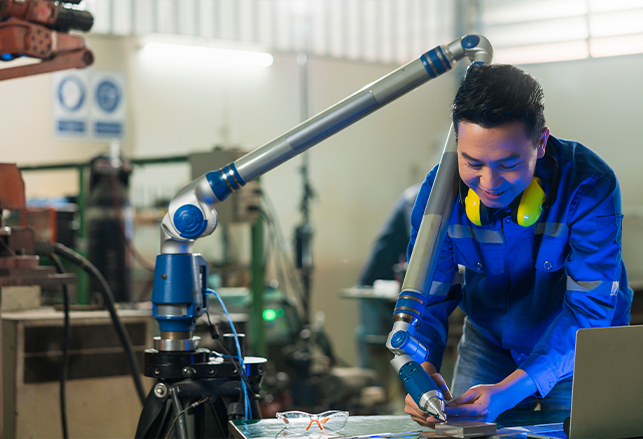
Students gain practical exposure through mechanical workshops, manufacturing labs, thermal engineering labs, and design & analysis laboratories equipped for experimentation, modelling, and testing.
Graduates can work in:
- Automotive industry
- Aerospace sector
- Manufacturing companies
- Energy and power plants
- Robotics & automation
- Product design and R&D
Mechanical engineers are required across multiple industries globally.
Yes. Mechanical Engineering is one of the oldest and broadest engineering fields with diverse employment opportunities and strong career stability.
The B.Tech Mechanical Engineering program is a 4-year undergraduate engineering degree.
Students must have completed 10+2 (PUC/12th) with Physics and Mathematics along with Chemistry/Computer Science/Biology/Electronics as per VTU admission regulations.
Students develop:
- Design thinking
- Product development capability
- Manufacturing knowledge
- Simulation & analysis skills
- Industry software exposure (Siemens PLM)